During the Bhotekoshi disaster, emergency teams had to work in an environment where roads, bridges, communications, and public infrastructure were damaged. Nepal deployed rescue resources while authorities coordinated operations across the affected region.
That creates a practical problem that is easy to overlook: where do emergency teams keep the equipment needed for the next operation?
Generators, pumps, vehicles, medical supplies, lighting systems, and construction machinery may all need to remain close to the affected area.
Protecting the Equipment
An emergency equipment area may occupy only a limited section of a disaster site.
The protection requirement is therefore specific:
keep equipment areas clear of runoff;
reduce water intrusion around stored machinery;
protect access points;
maintain usable working space.
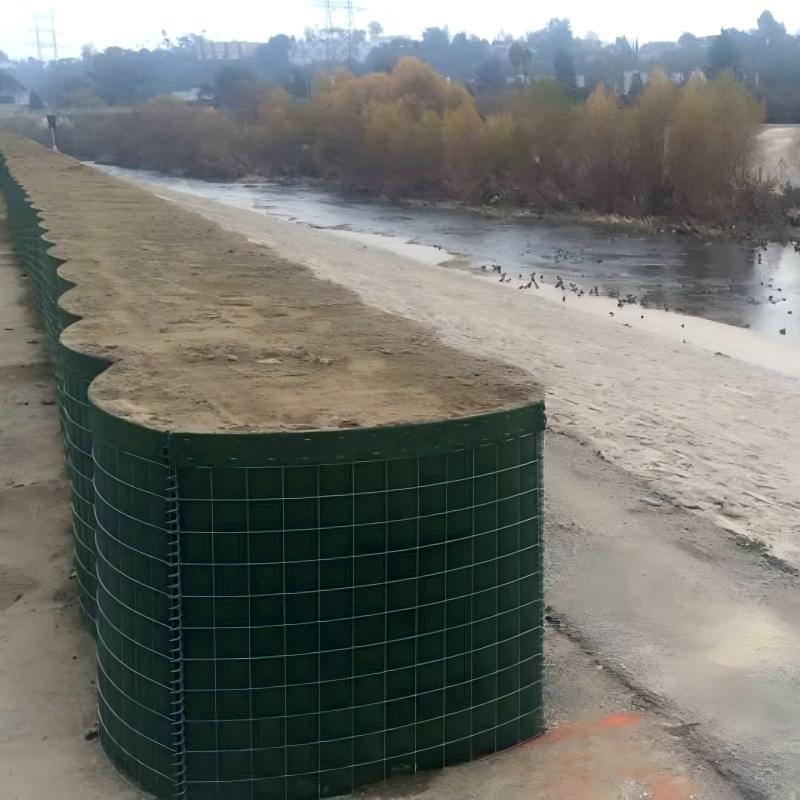
This is a suitable application for Flood Control Barriers, particularly when response teams need to establish operational zones quickly.
A Structure Designed for Outdoor Deployment
1.Emergency equipment may remain outdoors while roads are cleared and permanent facilities are repaired.
2.The welded low-carbon steel mesh provides the structural framework, with zinc-aluminum or hot-dip galvanized finishes available for improved corrosion resistance.
3.Inside the structure, a 2 mm polypropylene geotextile liner contains the fill material. UV inhibitors help the liner withstand prolonged outdoor exposure.
This combination gives response teams a barrier system suited to wet, exposed working environments rather than a lightweight site divider.
Different Sites, Different Protection Requirements
The system is available in more than 10 sizes, allowing emergency planners to select a layout according to the area requiring protection.
That flexibility is valuable when a response base moves or expands as recovery work progresses.
That creates a practical problem that is easy to overlook: where do emergency teams keep the equipment needed for the next operation?
Generators, pumps, vehicles, medical supplies, lighting systems, and construction machinery may all need to remain close to the affected area.
Protecting the Equipment
An emergency equipment area may occupy only a limited section of a disaster site.
The protection requirement is therefore specific:
keep equipment areas clear of runoff;
reduce water intrusion around stored machinery;
protect access points;
maintain usable working space.
This is a suitable application for Flood Control Barriers, particularly when response teams need to establish operational zones quickly.
A Structure Designed for Outdoor Deployment
1.Emergency equipment may remain outdoors while roads are cleared and permanent facilities are repaired.
2.The welded low-carbon steel mesh provides the structural framework, with zinc-aluminum or hot-dip galvanized finishes available for improved corrosion resistance.
3.Inside the structure, a 2 mm polypropylene geotextile liner contains the fill material. UV inhibitors help the liner withstand prolonged outdoor exposure.
This combination gives response teams a barrier system suited to wet, exposed working environments rather than a lightweight site divider.
Different Sites, Different Protection Requirements
The system is available in more than 10 sizes, allowing emergency planners to select a layout according to the area requiring protection.
That flexibility is valuable when a response base moves or expands as recovery work progresses.
2026-10-15
2026-9-24
Flood Control Barriers: Build ...
2026-9-8
Why Is the Cheapest Fence Post...
2026-9-1