Indonesia’s recent wildfires have affected extensive peatland areas across Sumatra and Kalimantan. For facilities operating near fire-prone land, the question is not only how to respond to the next fire, but how to prepare differently for it.
One Perimeter, More Than One Risk
Consider a facility near forest, plantation, or peatland.A wildfire could create several concerns at once:
·flames and radiant heat approaching the site;
·burning debris or embers;
·unauthorized access during an emergency;
·exposure of equipment or temporary facilities;
·damage to the existing perimeter.
Where a Military Barrier Fits
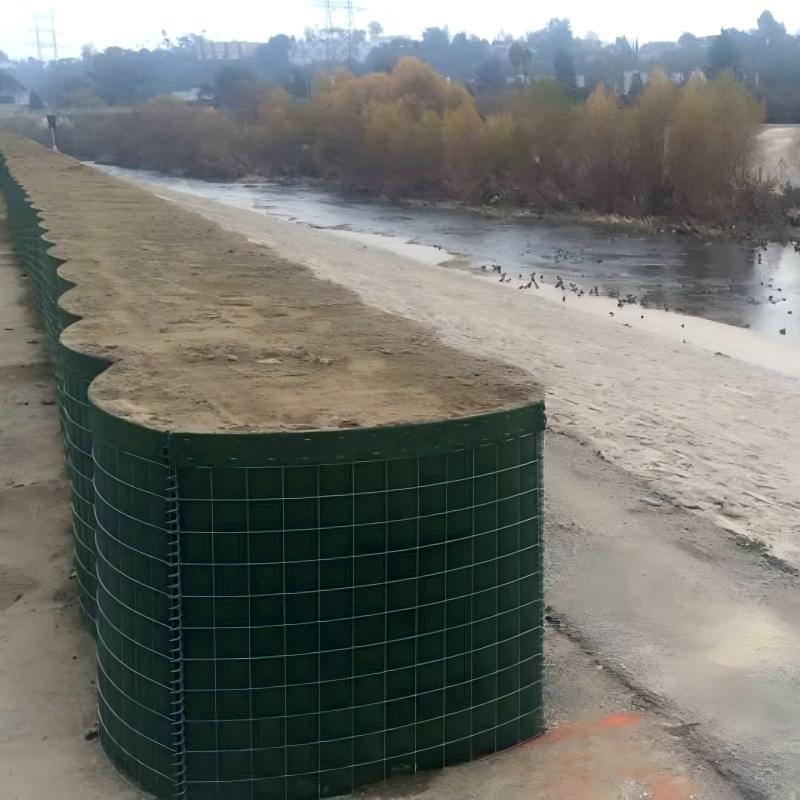
A military barrier can provide a more substantial protective structure than a conventional fence. Its modular welded-wire construction can be configured around emergency facilities, critical equipment, temporary compounds, and other areas requiring stronger perimeter protection.
Depending on the project design and applicable specifications, the system can also be considered as an additional layer against fire exposure, alongside its established security applications.
Beyond Wildfire Protection
This is where Military Barriers become particularly relevant to high-risk sites.The same protective system can serve multiple purposes, including:
blast protection, ballistic protection, perimeter security, and fire-risk protection.
The current wildfire situation in Indonesia is a reminder that fire risk can extend beyond forests and open land. Industrial facilities, emergency installations, infrastructure, and equipment located nearby may also require additional protection.
For these sites, a military barrier is worth evaluating before the next emergency—not as a replacement for firefighting systems, but as a stronger protective layer around what needs to remain secure.
One Perimeter, More Than One Risk
Consider a facility near forest, plantation, or peatland.A wildfire could create several concerns at once:
·flames and radiant heat approaching the site;
·burning debris or embers;
·unauthorized access during an emergency;
·exposure of equipment or temporary facilities;
·damage to the existing perimeter.
Where a Military Barrier Fits
A military barrier can provide a more substantial protective structure than a conventional fence. Its modular welded-wire construction can be configured around emergency facilities, critical equipment, temporary compounds, and other areas requiring stronger perimeter protection.
Depending on the project design and applicable specifications, the system can also be considered as an additional layer against fire exposure, alongside its established security applications.
Beyond Wildfire Protection
This is where Military Barriers become particularly relevant to high-risk sites.The same protective system can serve multiple purposes, including:
blast protection, ballistic protection, perimeter security, and fire-risk protection.
The current wildfire situation in Indonesia is a reminder that fire risk can extend beyond forests and open land. Industrial facilities, emergency installations, infrastructure, and equipment located nearby may also require additional protection.
For these sites, a military barrier is worth evaluating before the next emergency—not as a replacement for firefighting systems, but as a stronger protective layer around what needs to remain secure.
2026-10-15
2026-9-24
Flood Control Barriers: Build ...
2026-9-8
Why Is the Cheapest Fence Post...
2026-9-1